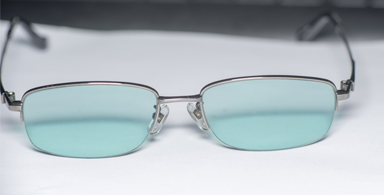
Safety in Epilepsy: Special glasses for photosensitive epilepsy
People with photosensitive epilepsy may benefit from wearing glasses with dark or filtered lenses, however you shouldn’t just run out and buy one of these glasses without discussing this with your doctor and perhaps being referred to an optometrist too.
Also, it is important to do your research carefully because there are a lot of products available, some of which may claim to do things that they actually don’t. Also, note, we are reporting on these products but are not endorsing any of them.
• Z1 lenses: Z-Blue™ is used for persons who are sensitive to flashing lights and repeating patterns. This lens cuts down on wavelengths from 580-640nm, they reduce the amount of light and filter out red light. They work by interrupting peripheral vision, which allows the brain to receive information without competing data.
• Red-light filtering lenses: these glasses filter out specific wavelengths of red light, which can be a trigger for seizures in people with photosensitive epilepsy.
• TheraSpecs: These glasses offer multiple frame options and the choice to send in your own frame. They offer Z-Blue, FL-Pro, and FL-Sun lenses.
The cost of epilepsy glasses depends on the frame, brand, and optometrist's fees. Polarized sunglasses can cost less than $20, while blue tinted lenses can cost $100 or more. Health insurance may cover some of the cost.
However, we again remind you that before getting glasses to help with your epilepsy, you should speak with your epilepsy doctor to determine if these might be helpful and safe.
Some research that has examined the use of glasses for photosensitive epilepsy: Wilkins AJ, Baker A, Amin D, Smith S, Bradford J, Zaiwalla Z, Besag FM, Binnie CD, Fish D. Treatment of photosensitive epilepsy using coloured glasses. Seizure. 1999 Dec;8(8):444-9. doi: 10.1053/seiz.1999.0337. PMID: 10627405.

